DAY 0 & DAY 1 (23rd & 24th September 2023) – SEOUL (City Walk)
This is the first time I am using the term “Day 0”, and hopefully the last time. This is because Wifey was already in Seoul while I had to wait 24 hours to catch the next available flight to South Korea. Hence, she had a ‘head start’ and she could visit those places which we initially planned to go, without me. Therefore, I would term this day as Day 0. Since she hardly can sleep on the plane, unlike me, it probably meant also that she had a bit of time to recover.
She managed to visit the Starfield Library on Day 0 and experienced some of the shopping streets around the Myeongdong area, which are located near our hotel. On Day 1 before I arrived, Wifey also managed to Deoksugung Palace, located to the west of where we stayed, before she slowly made her way to the meet-up point. We met up at around noon, and then we continued the rest of our adventures together.
We managed to visit the Gyeongbokgung Palace and the Bukchon Hanok Village before taking a cab to the Seoul Tower for dinner and to catch the night view of the city.
Day 0 – City Walk (Starfield Library and Myeongdong Street Market) (Wifey solo)
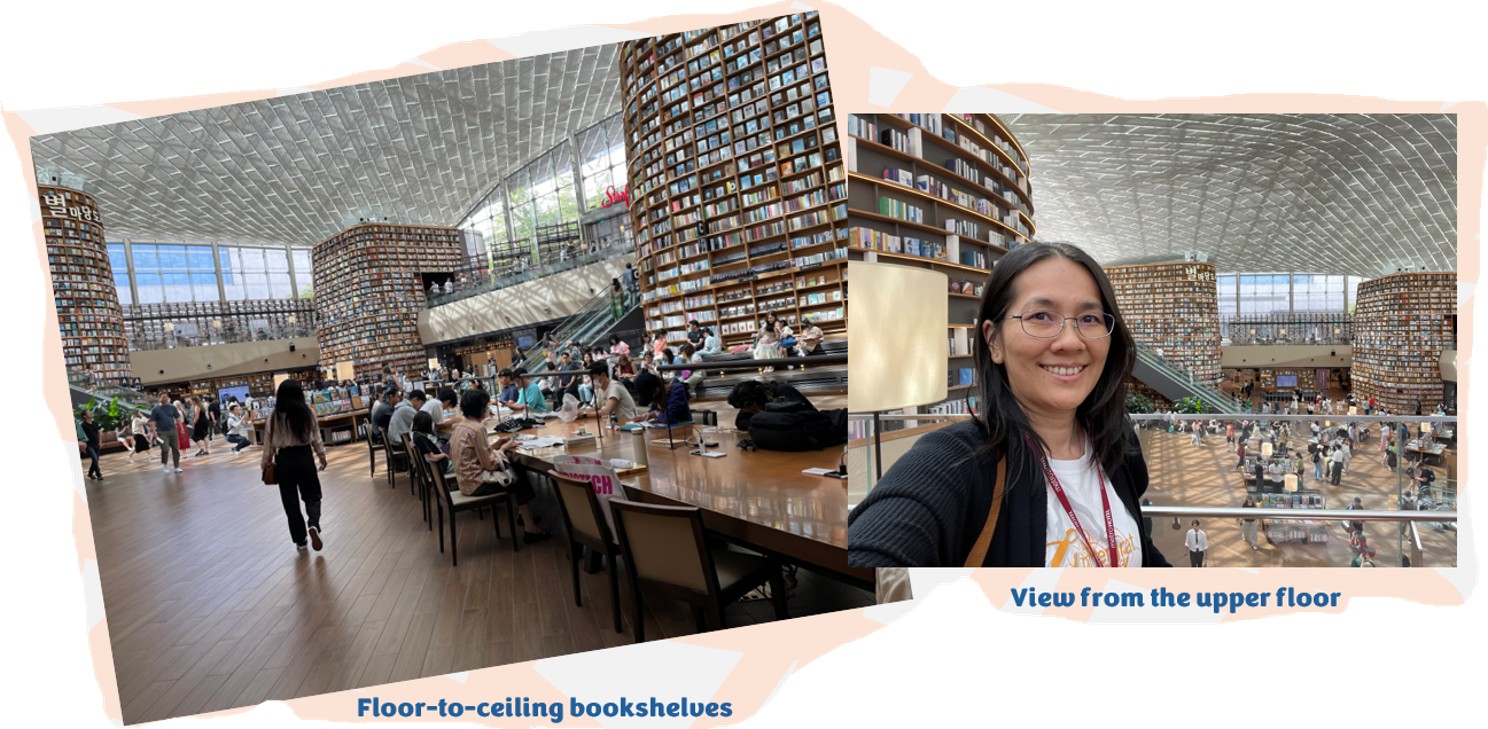
Wifey managed to get to the hotel at the Myeongdong area, right at the heart of Seoul City, where she checked in and dropped the luggage. And off she went to her own adventure. The first destination was the Starfield Library, which wasn’t too far away. Built inside the COEX Central Complex, the library features several 13m-tall bookshelfs, and holds more than 50,000 books. Since its opening in 2017, it had attracted tourists from all over the world to view its architectural design and unique 2-storeyed floor-to-ceiling bookshelfs. There are coffee shops and snack bars within the building, catering to those who need to burn the midnight oil.
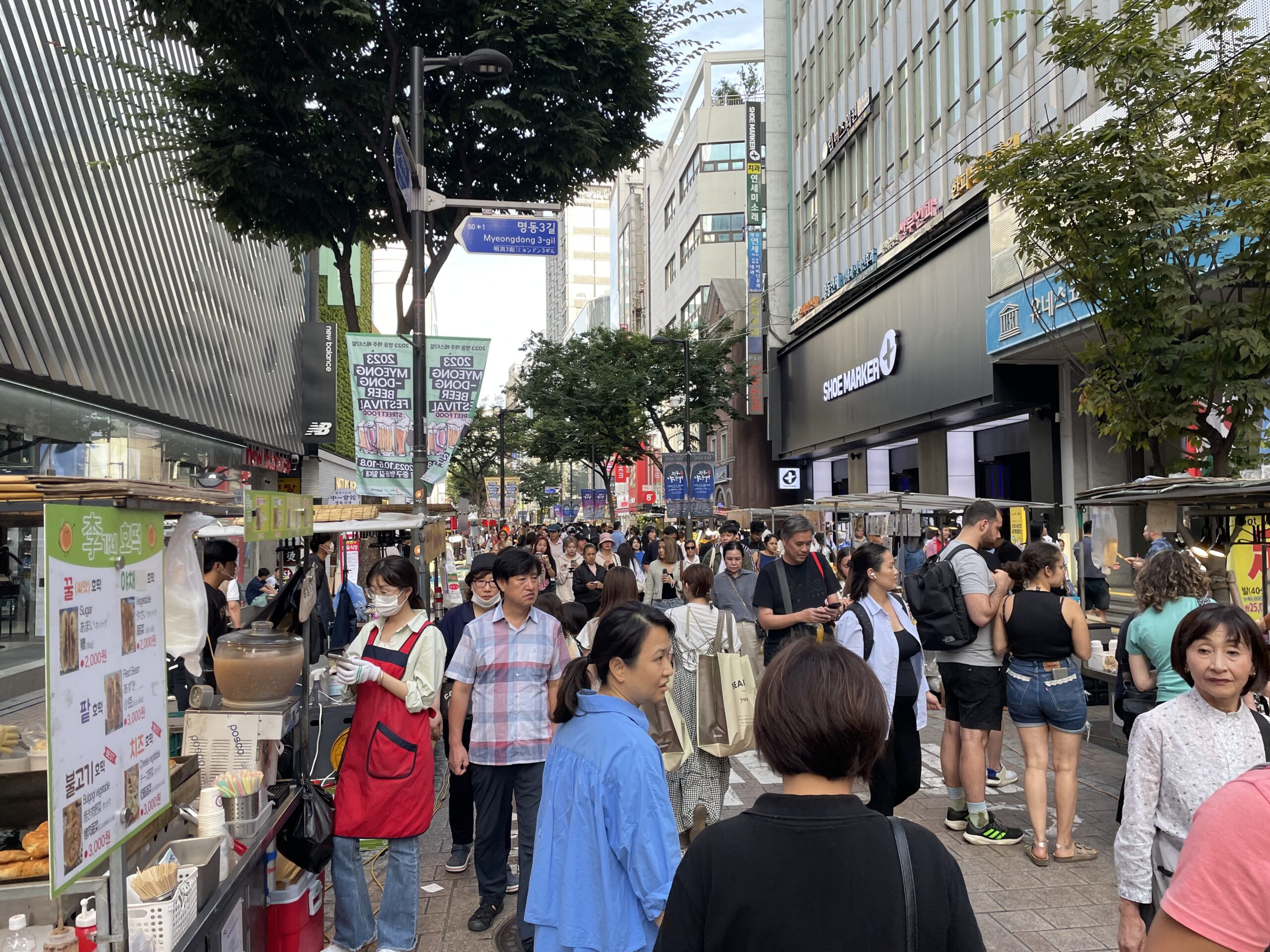
After the visit to the library, Wifey went back to the Myeongdong area to try out the street market. The night stalls were just prepping up for the evening crowd, a mixture of locals (office workers just completing their days’ work) and foreign visitors. Small stalls line the pedestrian streets, and right behind them, the rows of shops selling branded merchandise. The food stalls emit aromatic smells from their open-air woks, food being prepared to suit any taste. You can find food, souvenirs, clothing and normal everyday needs at these stalls.
View of the street market along Myeongdong 3-gil
Day 1 – City Walk (Deoksugung Palace) (Wifey solo)
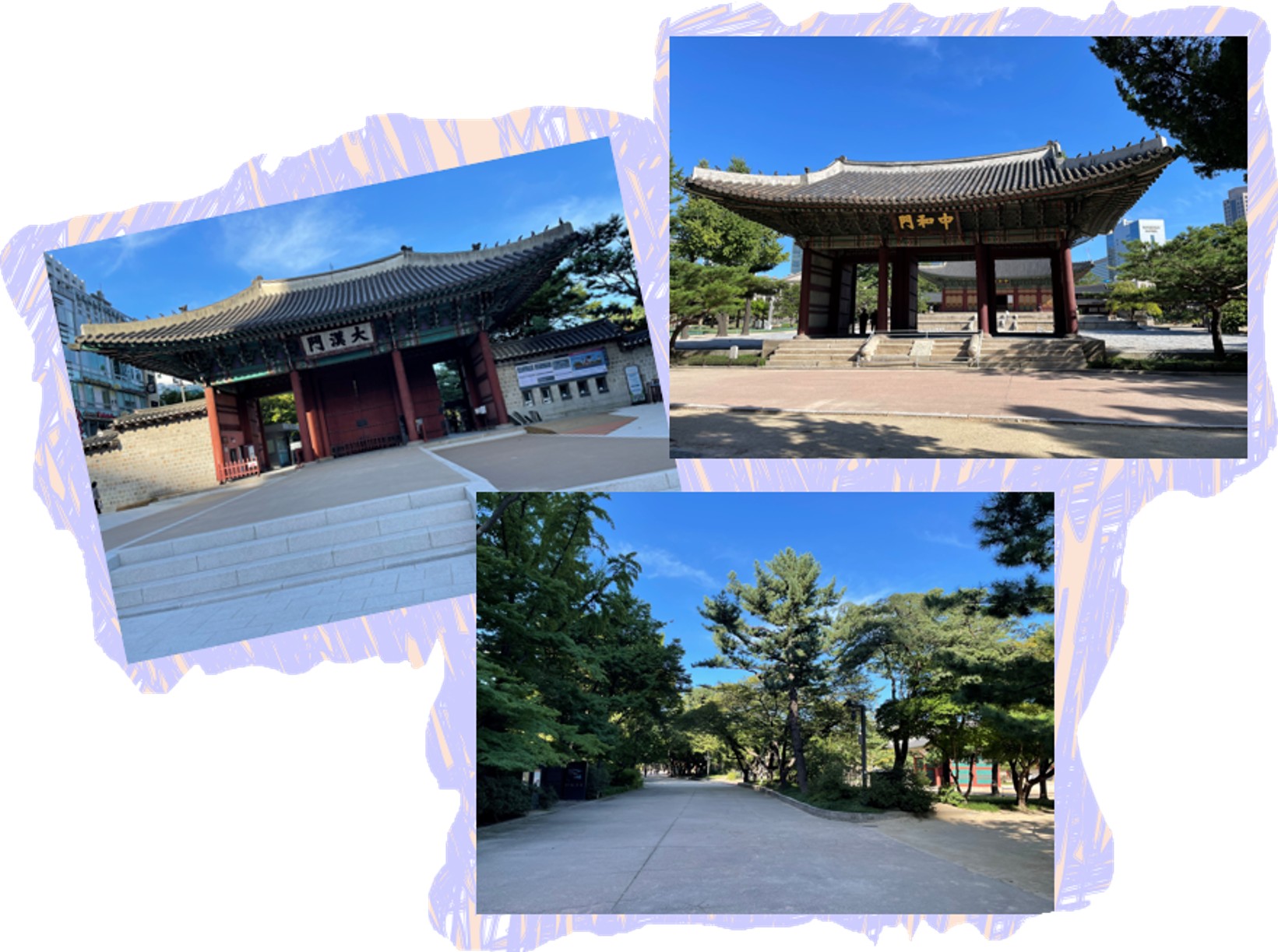
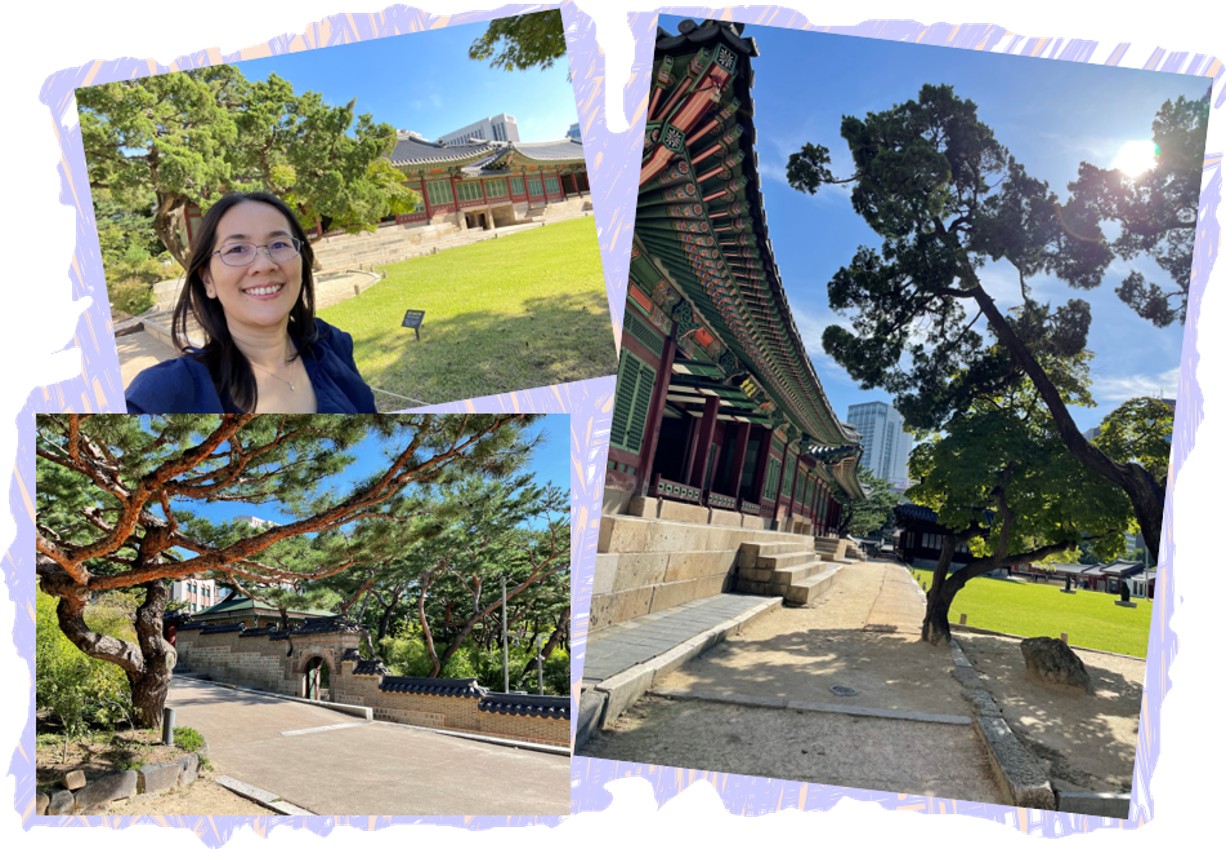
From the hotel, Wifey took a short 1.2km walk to the Deoksugung Palace in the early morning. The palace grounds were pretty quiet then, devoid of tourists for the moment. They would come, of course, since this is one of the famous five palaces in Seoul. Wifey practically had the grounds to herself as she walked around and took photos.
The Deoksugung Palace was built as a residence in the 1300s during the Joseon period, before being upgraded to a palace in the 1600s by King Gwanghaegun and was named Gyeongungung Palace.
Down the years, it was used as the main palace several times by different kings, then at one period, was downgraded to the point of almost being abandoned entirely by other royal families. In 1907, it was renamed Deoksugung Palace. A massive fire on 14th April 1904 destroyed many buildings, some from the Joseon Period.
Pictures from the Palace Grounds of Deoksugung Palace
Walk to Gyeongbokgung Palace
Wifey and I met up just before 11:00am along the Myeongdong area, and the first order of business would be to leave the luggage at the hotel. And then we were out to wander the streets of Seoul in the general direction of the Gyeongbokgung Palace. Just a short 2km walk to warm up for the rest of the day!
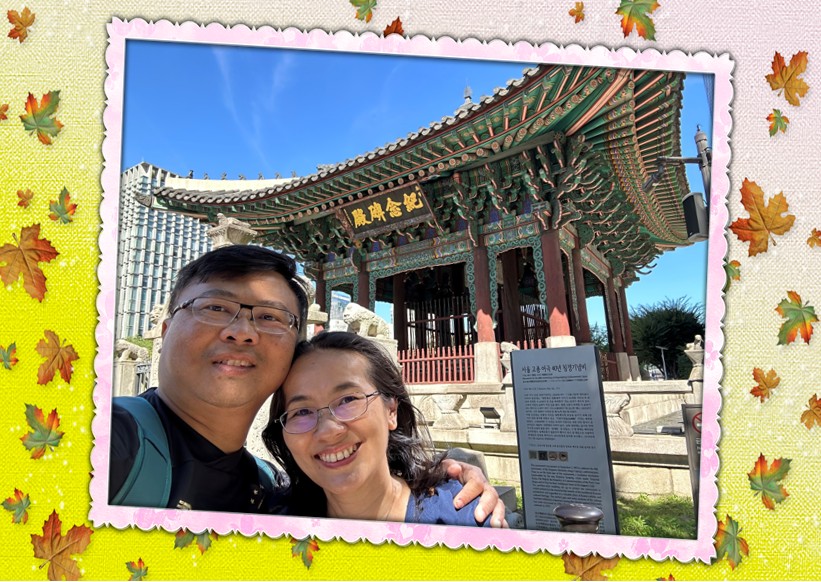
Our first photo together in front of the Bigak, Monument for the 40th Anniversary of King Gojong’s Enthronement
Along the way, we took several photos including the Bigak, which is a monument built to honour King Gojong. This king was the one responsible for changing the name of Deoksugung Palace. Further down the road, as we were approaching the palace, we also found two statues, one by the side of the road, the other right smack in the middle of this thoroughfare.
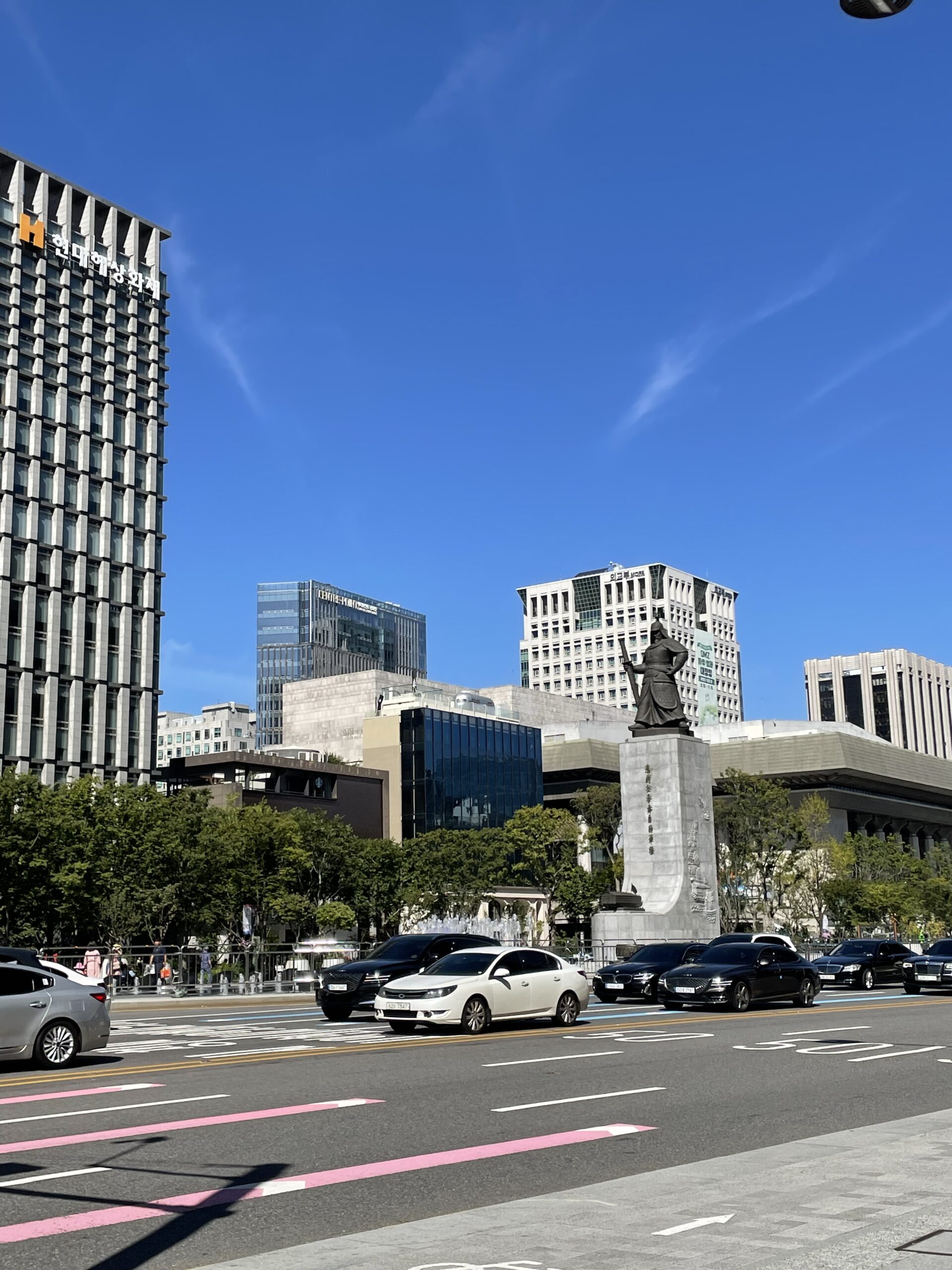
Statue of Admiral Yi Sun-sin
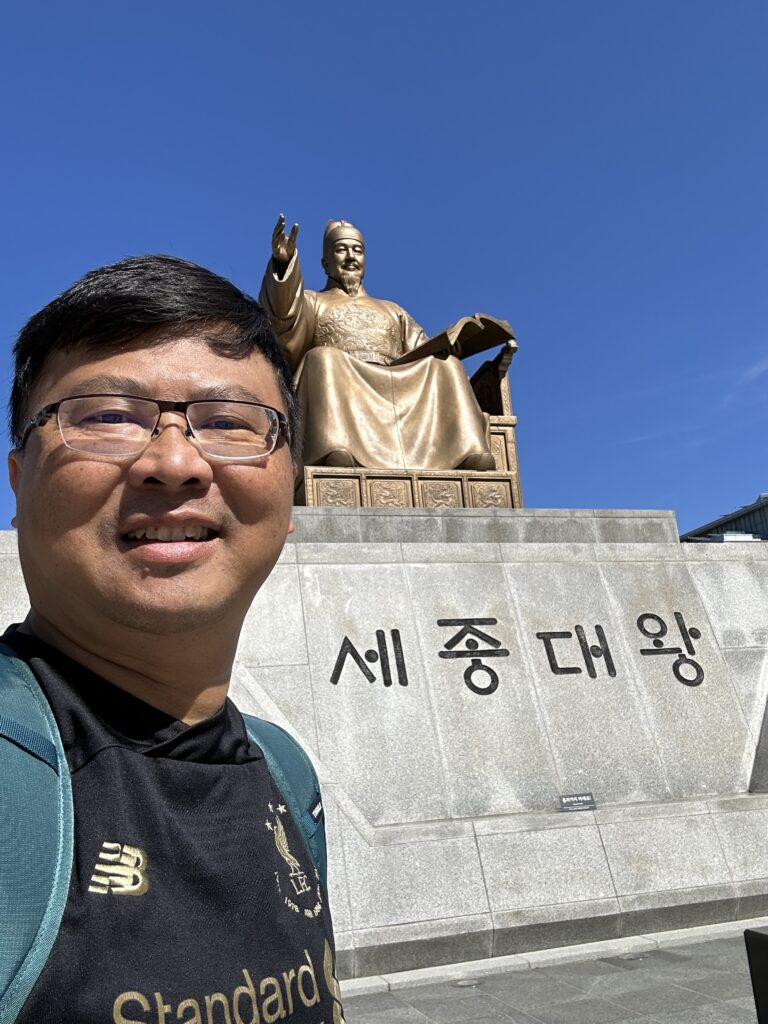
Statue of King Sejong the Great
Admiral Yi Sun-sin is known for his courageous fight with the Japanese navy in the 1600s during the Imjin War. His statue was erected on 27th April 1968 and was originally bronze in colour but years of exposure to the elements had turned it deep green. It took 40 days to restore and repaint in November 2010. The statue stands at 6.5m tall, erected on a pillar that is 10.5m tall. The fountains at the foot of the statue were added later, shooting jets of water to different heights, signifying the waves of the sea.
Meanwhile, just nearby is the Statue of King Sejong the Great, the 4th king of the Joseon dynasty. This king is one of the most revered figures in Korean history and is remembered most for inventing the Korean alphabets, the Hangul, which is used until today. The statue is 6.2m high and 4.3m wide, and was inaugurated on 9th October 2009.
Gyeongbokgung Palace
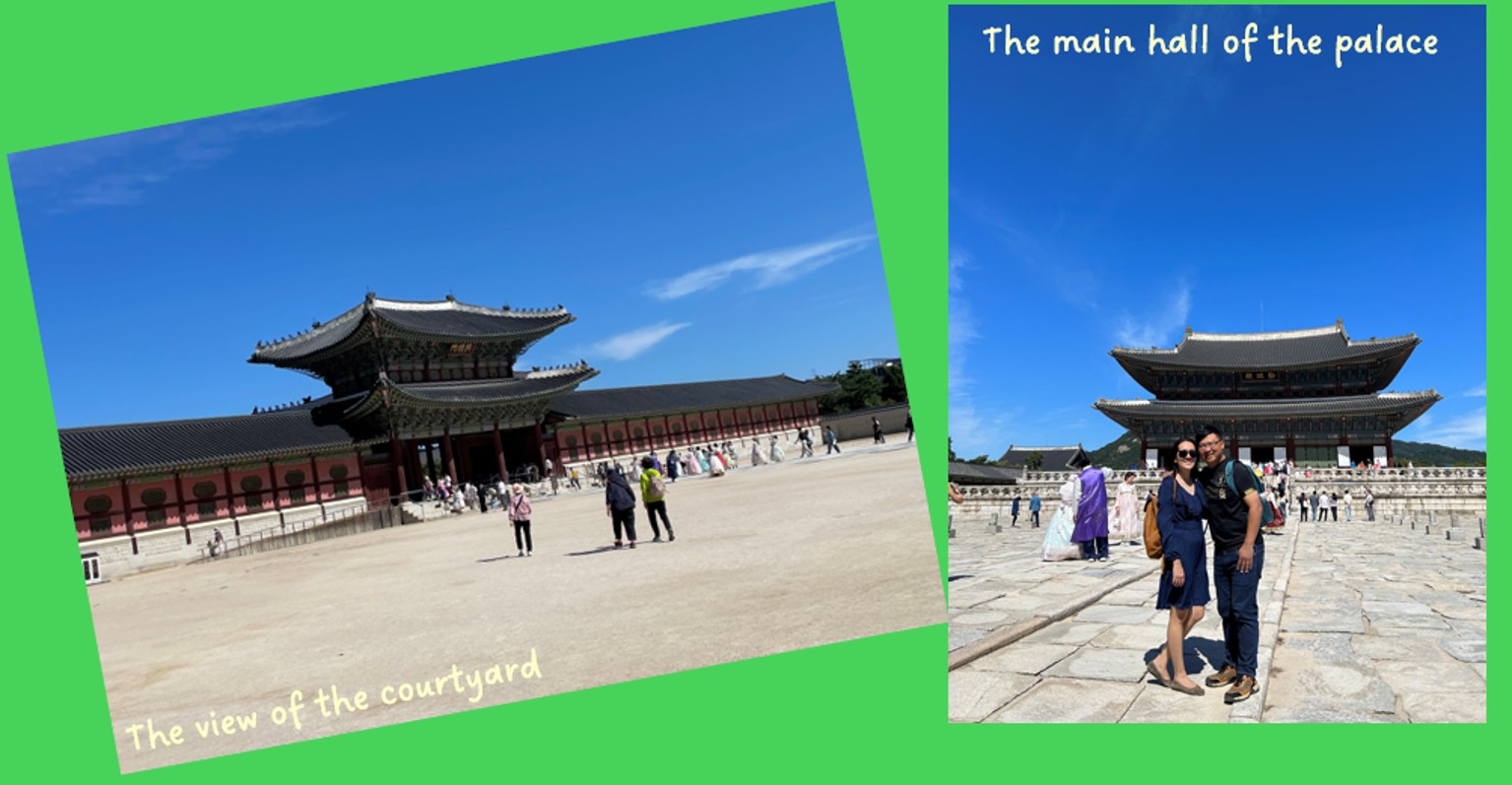
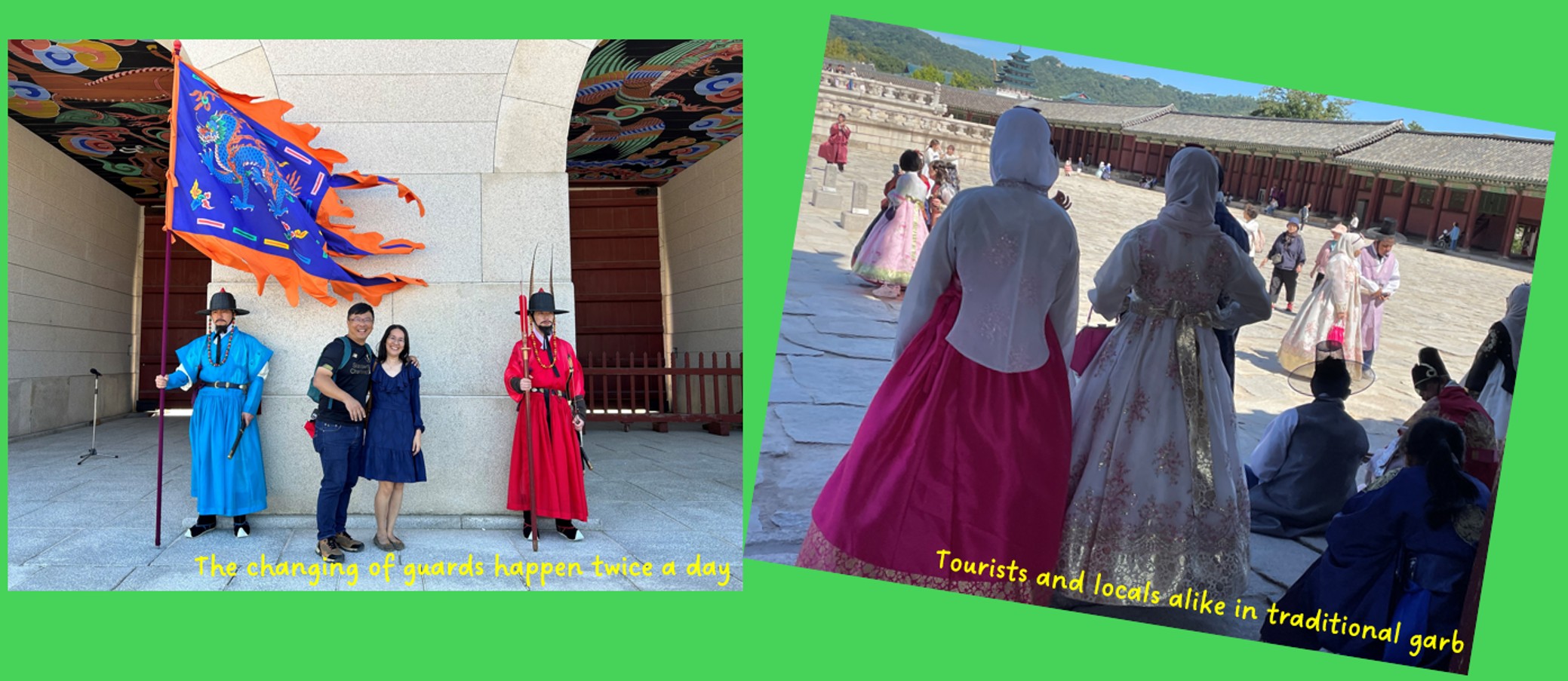
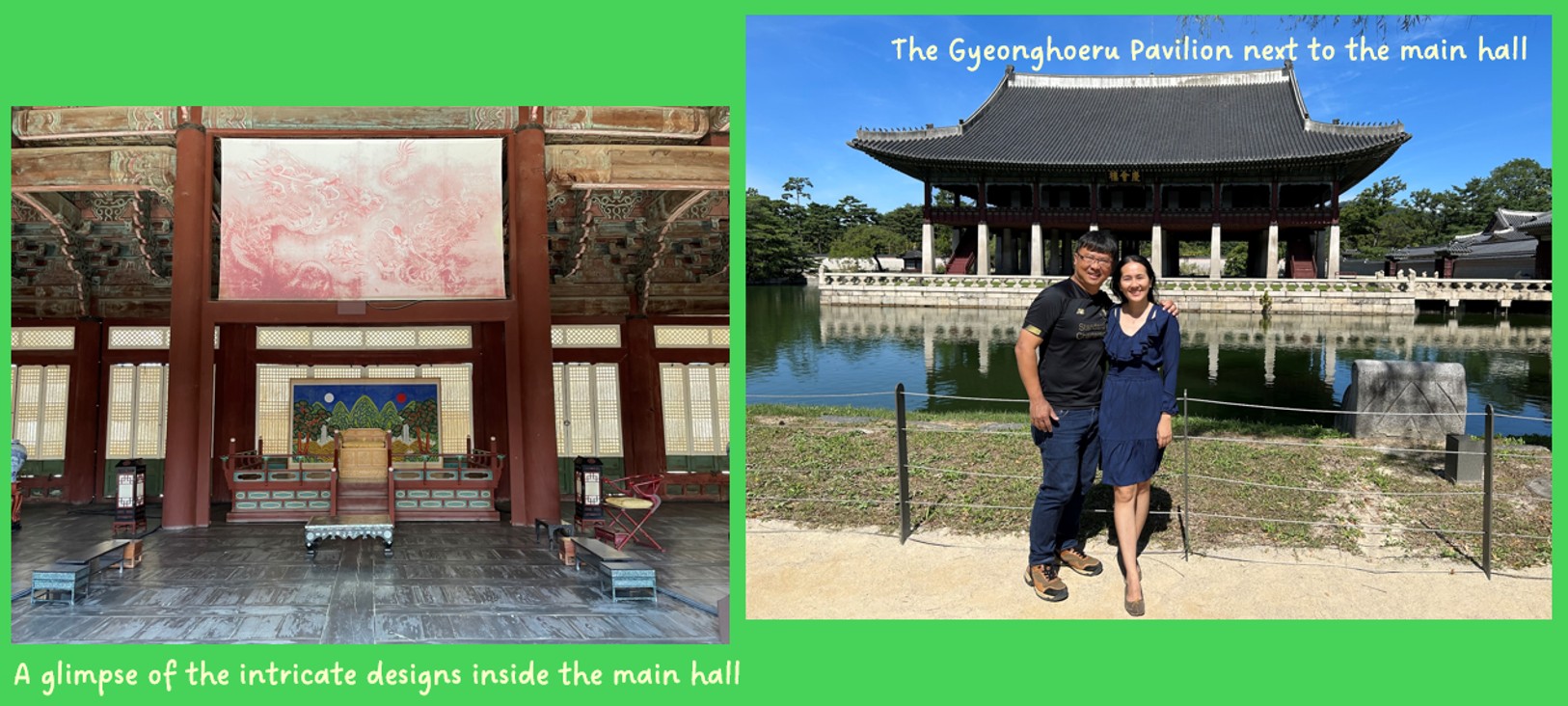
Not too far from the two statues is the entrance to the Gyeongbokgung Palace, its name meaning ‘great blessings’. Established in 1395, it grew from just several buildings to over 500 structures in its vicinity, but during the Japanese occupation of the Korean peninsula in the early 1900s, many of the buildings were either sold or systematically demolished to remove the royal identity of the Koreans. Many of the buildings which are visible today have been restored and are continuing to be restored under the government’s Restoration Plan.
The whole palace grounds are huge with many structures and buildings to view and admire. Those in traditional garb, whether locals or tourists are given free passes into the palace grounds (Bro Ray: I have never really been into this kind of thing, so don’t hope to see me in traditional garb just yet.…) There is the changing of the guards which happens twice a day at the entrances of the palace but we didn’t hang around for that as the timing was not right for us. We had a guided tour planned at 2:30pm.
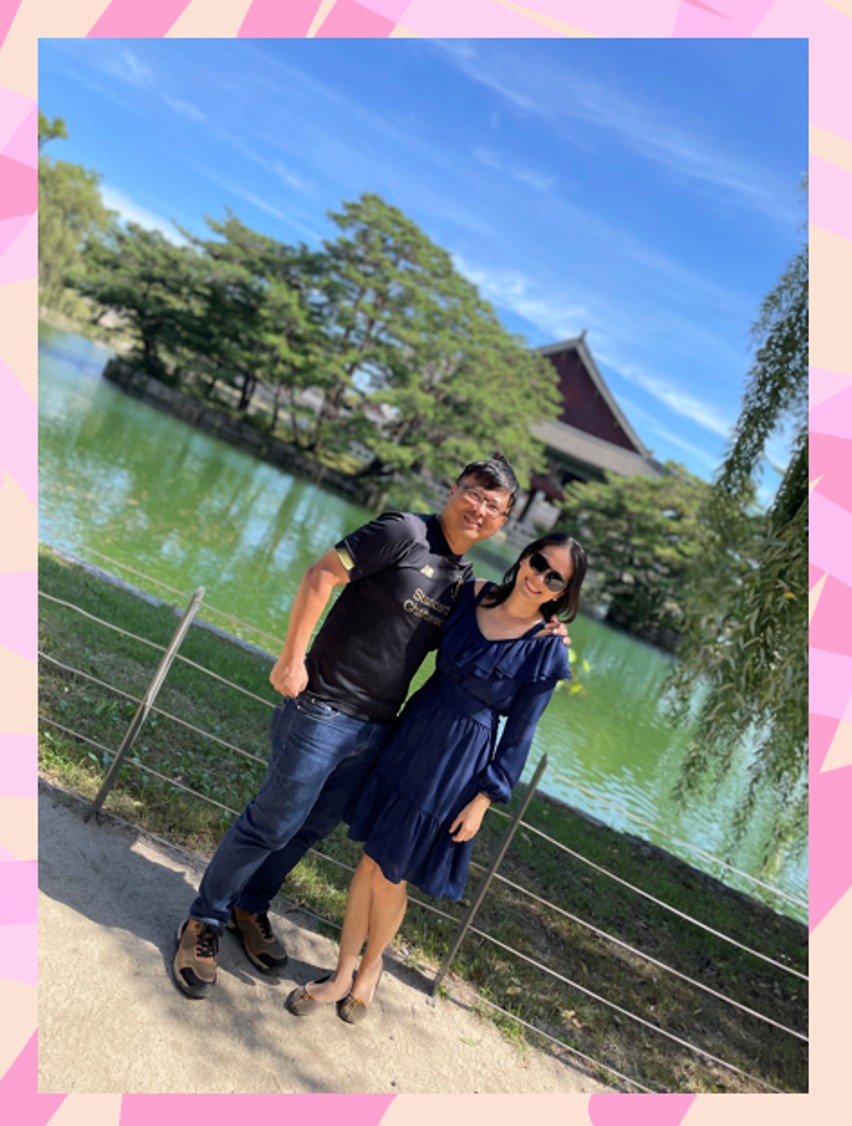
One more to add to the album....
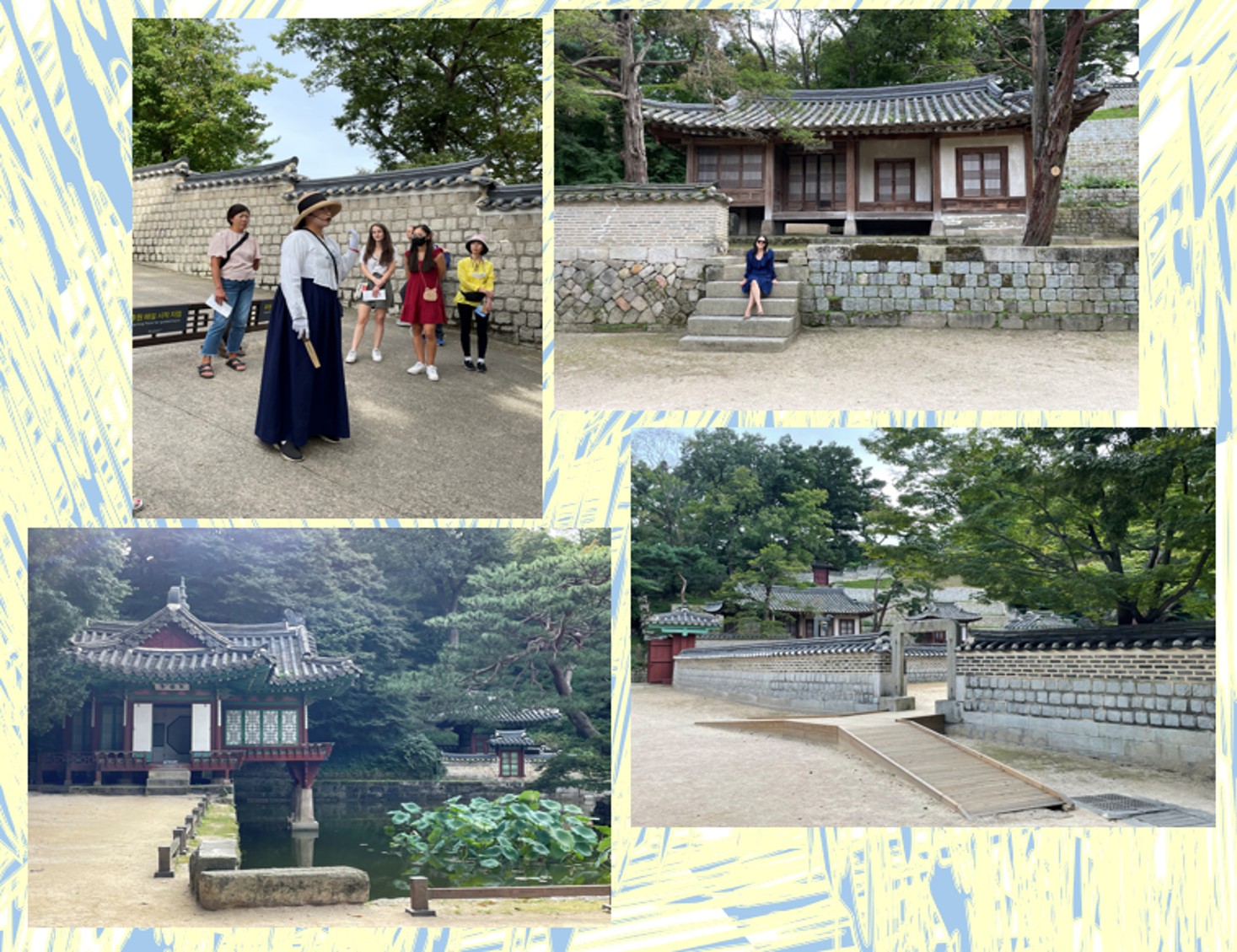
At 2:30pm, we met up with our tour guide who took us to another section of the palace grounds and introduced the buildings and their functions and explained about the daily lives of the palace officials and the servants’ routines to keep the whole place running. It was easy to envision the hundreds of servants running around ensuring that the royals and their ilk are comfortable through summer and winter. Well done to our guide for speaking so eloquently, too! (Bro. Ray: Sorry, I can’t recall her name!)
From top left (clockwise): (1) Our guide in action (2) Some of the more obscure buildings on the palace grounds (3) Evidence of restoration works being carried out (4) This area doesn't get much tourist traffic
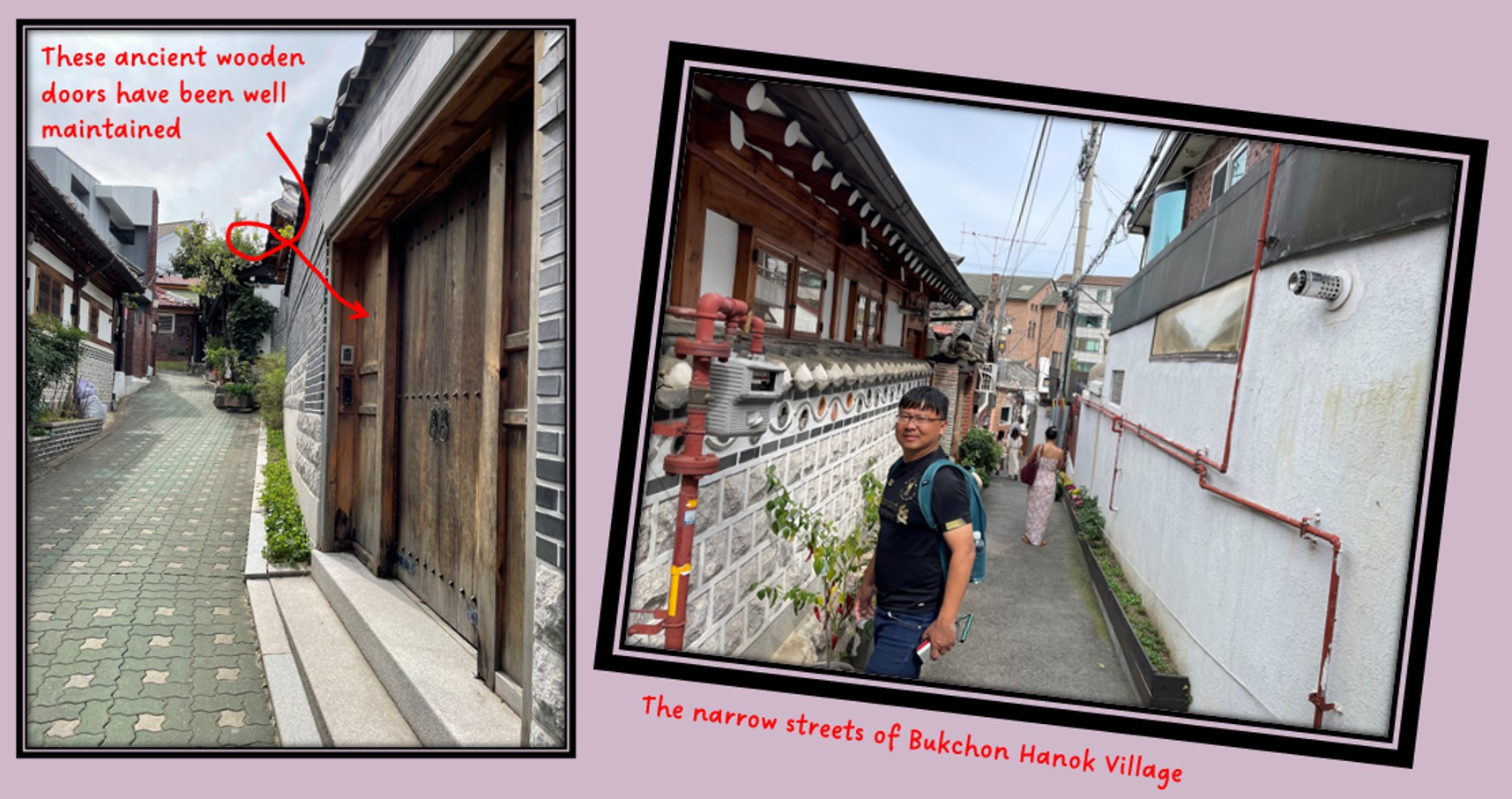
Bukchon Hanok Village
Apparently, this area received 6.4million visitors in the year 2024, making things a little bit uncomfortable for the residents that live here. Despite the rapid expansion of Seoul as a city, the charm of this area is that the old traditional buildings have been maintained, though upgraded with creature comforts like air conditioning and satellite TVs! Previously, there were artisans producing traditional arts and crafts, but we didn’t see them on this trip. Perhaps the trade is no longer profitable?
Seoul Tower
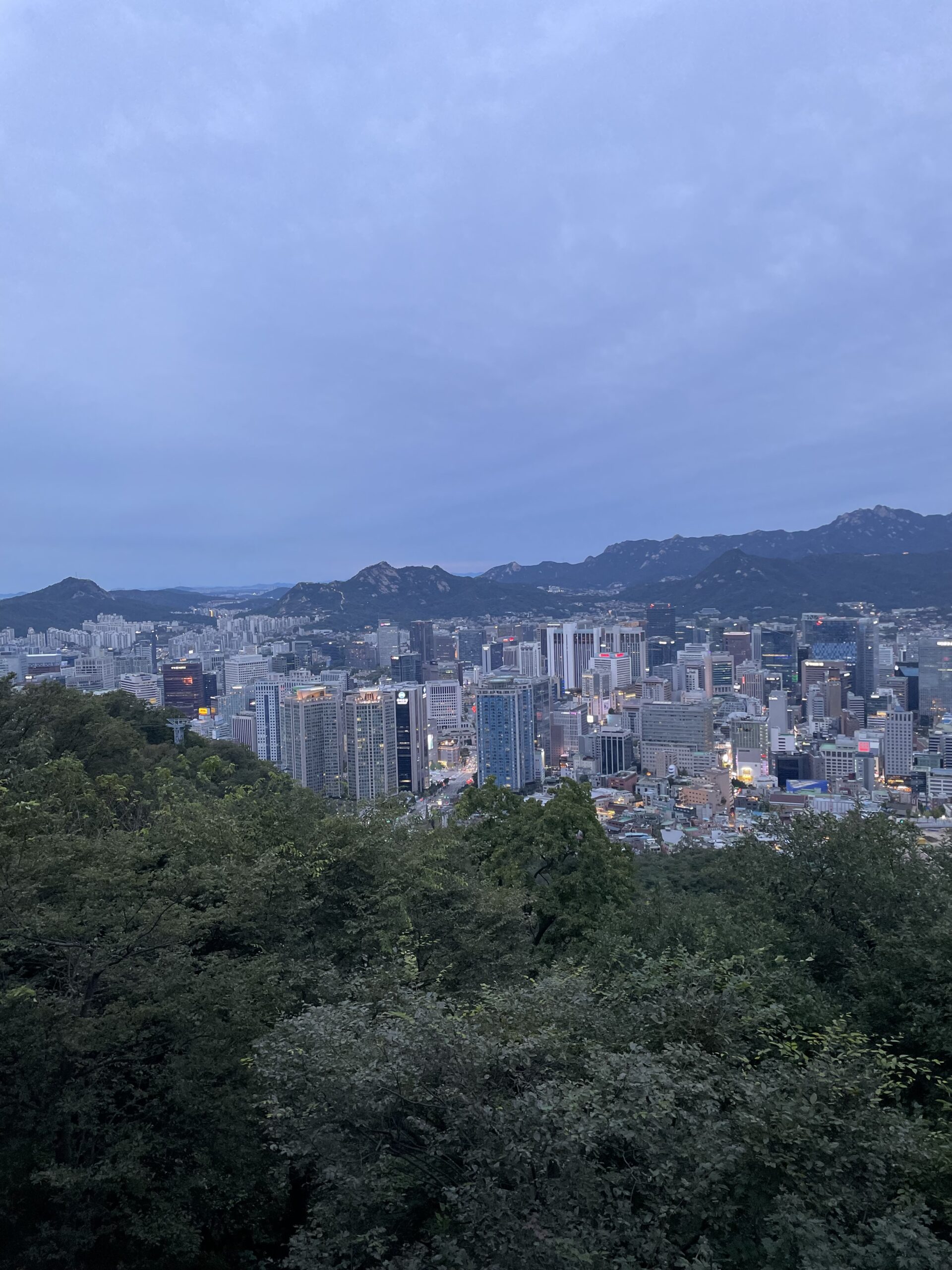
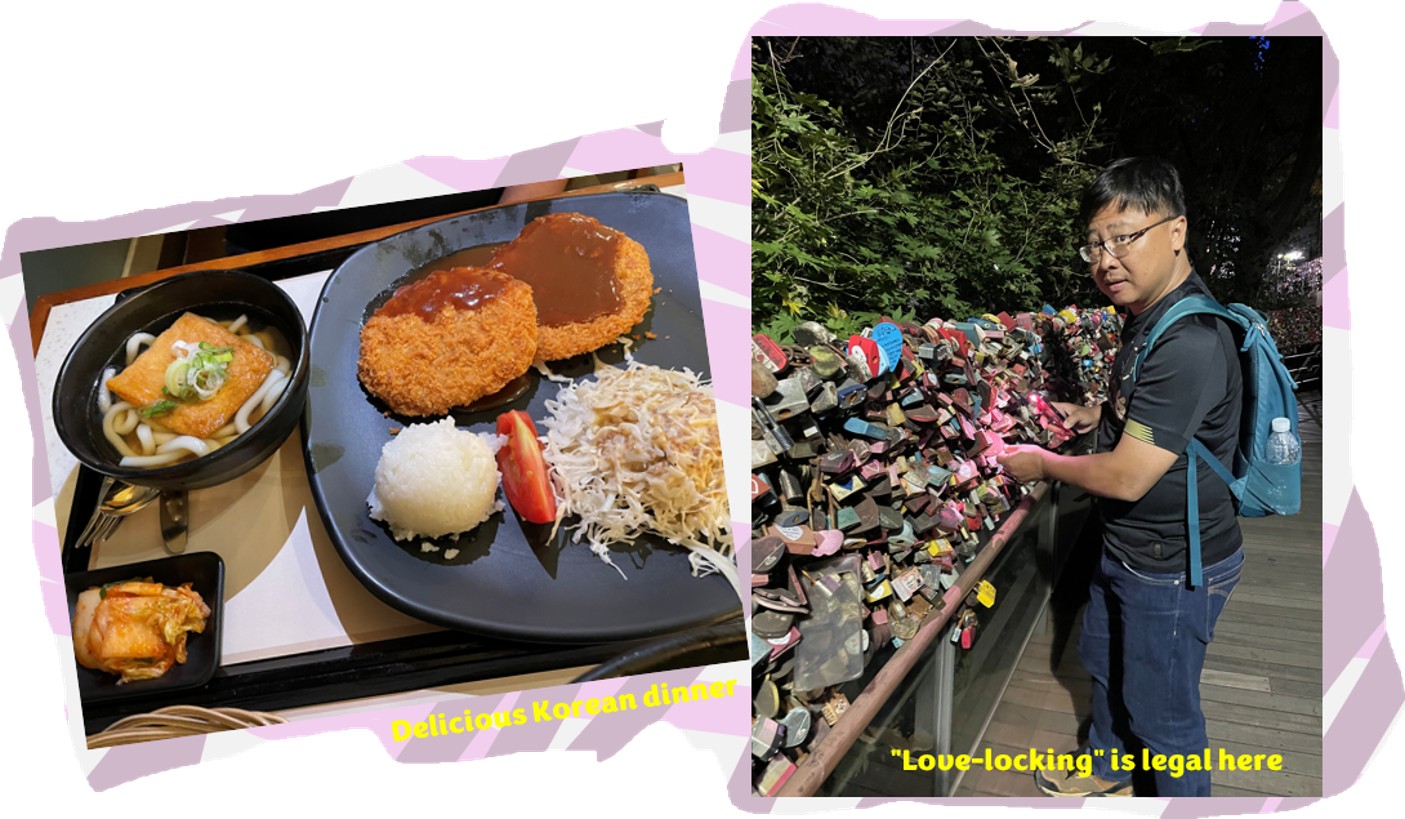
The sun was setting by the time we caught a cab up to Seoul Tower, where the view of the entire city lay before us. The evening rush hour had just begun and the evidence of that can also be seen in the twilight as hordes of cars were making their way out of the city. We came up here for the view as well as to have our first proper meal. Here is also the location where “love locks” are allowed to be affixed onto a purpose-built bridge.
Now We Know
The “love lock” reportedly first happened in Serbia during the time of World War I. The story goes that Nada, a maiden from the town of Vrnjacka Banja fell in love with a Serbian officer named Relja and they often met at the town’s bridge Most Ljubavi. Nada died of a broken heart when Relja went away for war and fell in love with another woman. Ever since then, the young women of the town, wanting to “protect” their love, wrote their names and the names of their loved ones on a padlock, and locked them onto the town’s bridge and threw the keys into the river. However, this act of “love locking” only truly picked up after it was depicted in a 2006 Italian book named I Want You by Federico Moccia. But, not every bridge or city accepts this practice due to safety concerns and such.
Twilight view of Seoul City
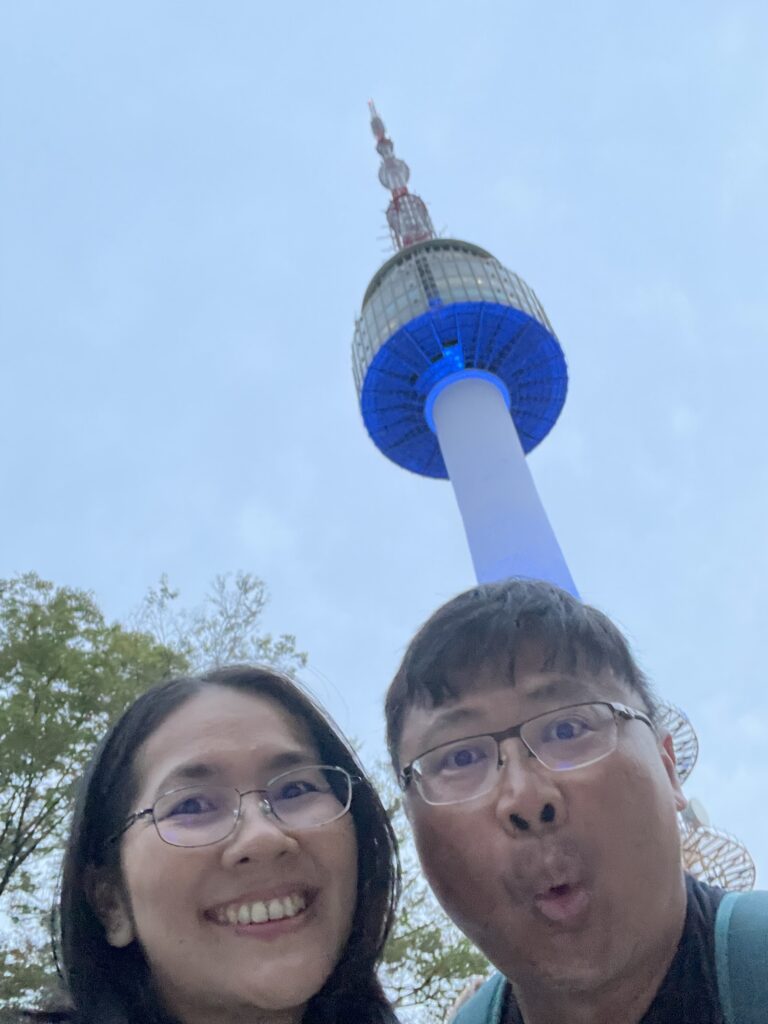
The Seoul Tower overshadowing everything else
Summary of Day 0 and Day 1
So, I finally got into Seoul after the unexpected drama. I only managed to visit one of the five palaces in Seoul. The cultural village was a little disappointing, but it really can’t be helped. Life moves on, and modernity catches up with us everywhere. While Seoul Tower is not a must, we decided to come here nonetheless, just to relax and enjoy the cool atmosphere. Overall, just so glad that I got here and we could go on with the rest of our itinerary.